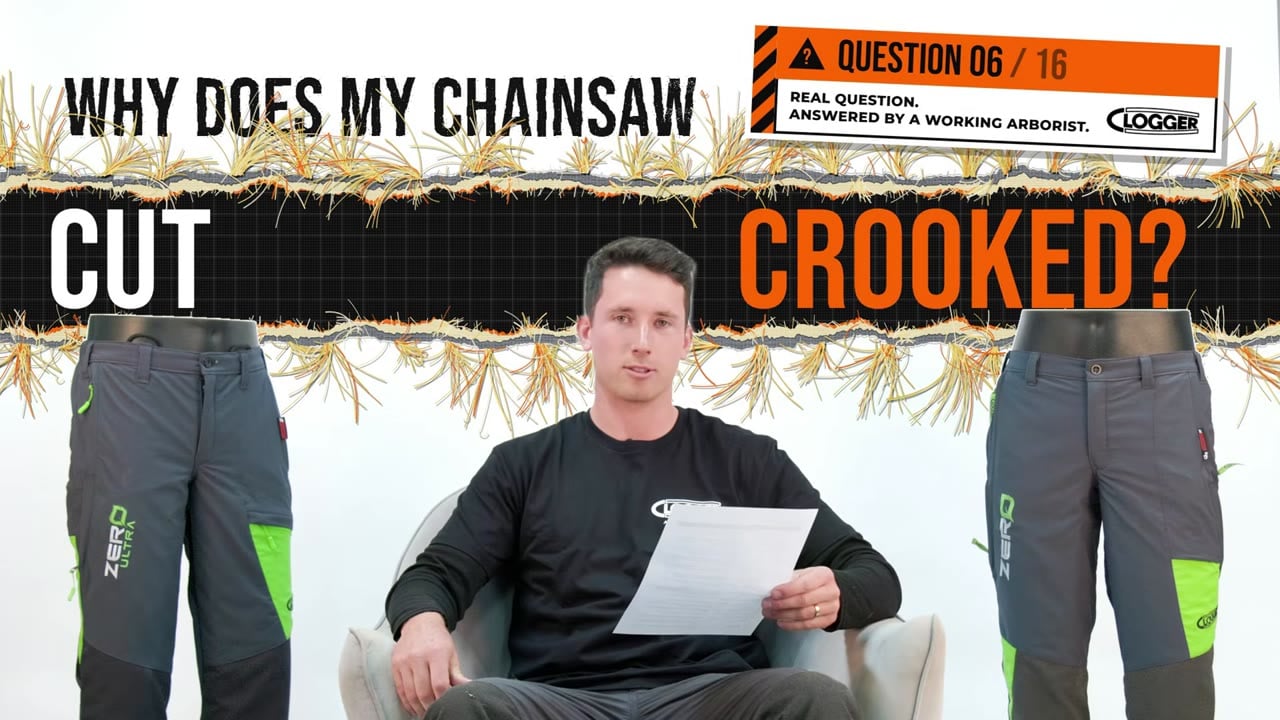
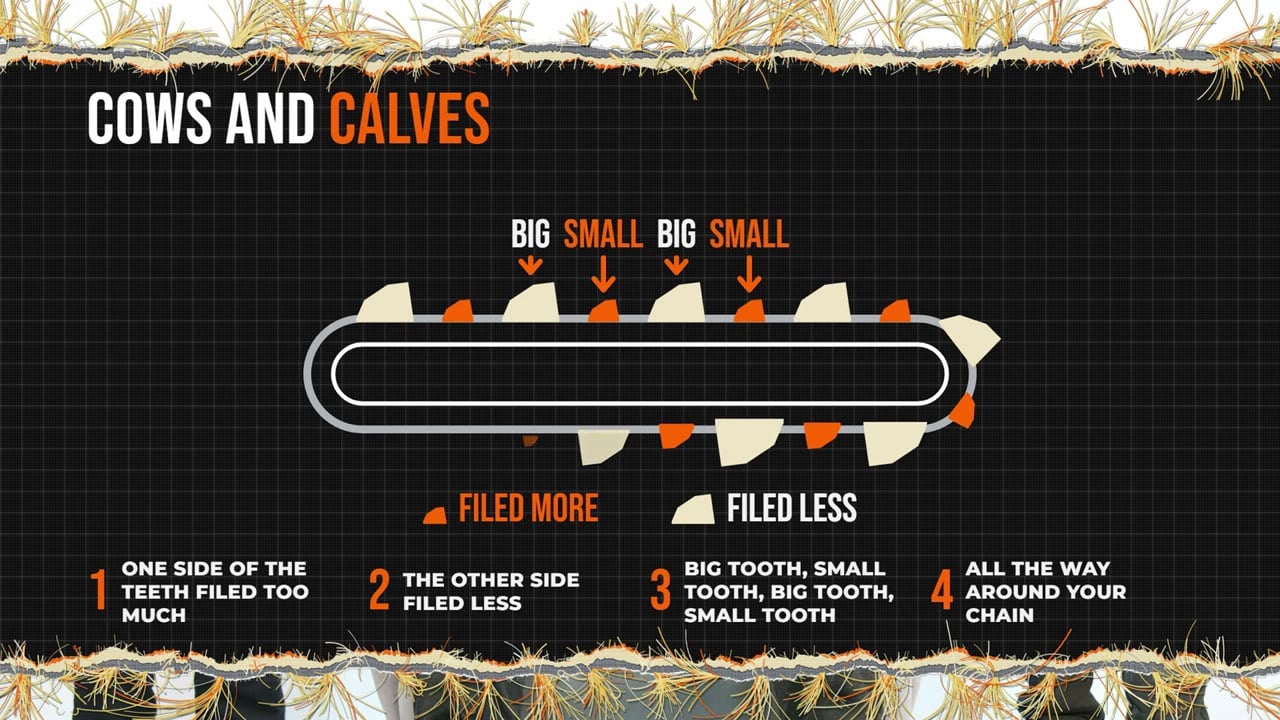
Short answer: Three things make a chainsaw cut crooked, pull to one side or cut at an angle. Uneven sharpening, where one side of the teeth has been filed more than the other ("cows and calves"). Depth gauges filed lower on one side. Or a worn bar that needs dressing. Check your sharpening first, then the depth gauges, then the bar.
Watch this answer on YouTube (2:13) · Full episode · Subscribe
What Phil says
"Firstly, check your sharpening. It could be that you've got what we would call in New Zealand cows and calves, where you've got one tooth or one side of the teeth that you've filed too much, and the other side you've filed less, so you've got big tooth, small tooth, big tooth, small tooth all the way around your chain. So one side is going to cut more if your depth gauges are even."
"The other reason is you could have filed your rakers, your depth gauge too much on one side, and that way that makes the bar pull through the wood, on one side more than the other, the same as having cows or calves. And I'd say the third reason is because your bar isn't dressed correctly. Now, it's probably unlikely for most people, but as a professional, we use chainsaws every day, and your bar does get worn. They make nice little bar dressing tools, or you just take it to your local shop and they'll sort it out for you."
The three causes
- "Cows and calves" sharpening. The teeth on one side have been filed more than the other: big tooth, small tooth, all the way around. The side with the bigger teeth cuts more, so the saw pulls.
- Uneven depth gauges. If the rakers are filed lower on one side, the bar pulls through the wood on that side, with the same result.
- A worn bar. Less likely for occasional users, but a bar that's used every day wears and needs dressing.
How to fix it
- Even up your sharpening so both sides of the chain match.
- Set your depth gauges to the same, correct depth on both sides.
- Dress the bar with a bar dressing tool, or take it to your local saw shop and they'll sort it out.
Free one-page checklist
Phil’s chainsaw troubleshooting checklist
Seven common problems, the checks a working arborist runs first, and when it’s a job for the saw shop. Print it and keep it with your saw.
Related questions
- My chainsaw is sharp but won't cut. Why?
- When is a chainsaw chain blunt or worn out?
- How tight should a chainsaw chain be?
- All 16 chainsaw questions, answered
From Clogger Answers, episode 1. These are Phil's opinions, based on his professional experience. Always follow your saw's manual and wear the right protective gear.
Phil is a professional arborist based in Invercargill, New Zealand, who runs saws every day with his crew. Clogger makes chainsaw pants and chainsaw chaps.